What if learning to trust yourself isn't about becoming someone new, but recognizing the patterns you're capable of changing?
Why Don't I Trust Myself?
Have you ever wondered why you struggle to trust yourself?
Why, despite knowing what you want, what you need, and what would ultimately be good for you, you find yourself repeating the same patterns that seem to hold you back?
Some call it self-sabotage. Others call it a lack of discipline, willpower, or impulse control.
But I think there's something deeper worth exploring.
Our brains are remarkably good at recognizing patterns. Over the course of our lives, we begin to recognize the ways we behave, the decisions we make, and the outcomes that follow.
And whether we like it or not, our brains also recognize the patterns in which we've disappointed ourselves.
Every promise we haven't kept. Every boundary we've crossed. Every goal we've abandoned.
Eventually, we begin to associate ourselves with those patterns.
I always do this. I never follow through. I can't trust myself.
But here's the thing.
Just because you've repeated a pattern doesn't mean you're destined to keep repeating it.
And learning to trust yourself begins with recognizing that you have the capacity to disrupt it.
You're Already More Trustworthy Than You Think
Before we start picking apart everything we don't like about ourselves, I want you to consider something.
What are the ways you already show up for yourself?
Maybe you wake up at the same time every morning. Maybe you make yourself a cup of coffee without fail. Maybe you're always there when a friend needs you, or you're consistently on time for work.
These things might seem insignificant, but they're evidence of something important.
You already have the capacity for consistency.
There are patterns in your life where you've proven yourself reliable, capable, and trustworthy. You've simply become so focused on the patterns you dislike that you've stopped recognizing the ones worth celebrating.
And when we begin taking pride in those small, positive patterns, something starts to shift.
We recognize that self-trust isn't entirely foreign to us.
We've been practising it all along.
Why We Avoid Facing Our Self-Sabotaging Patterns
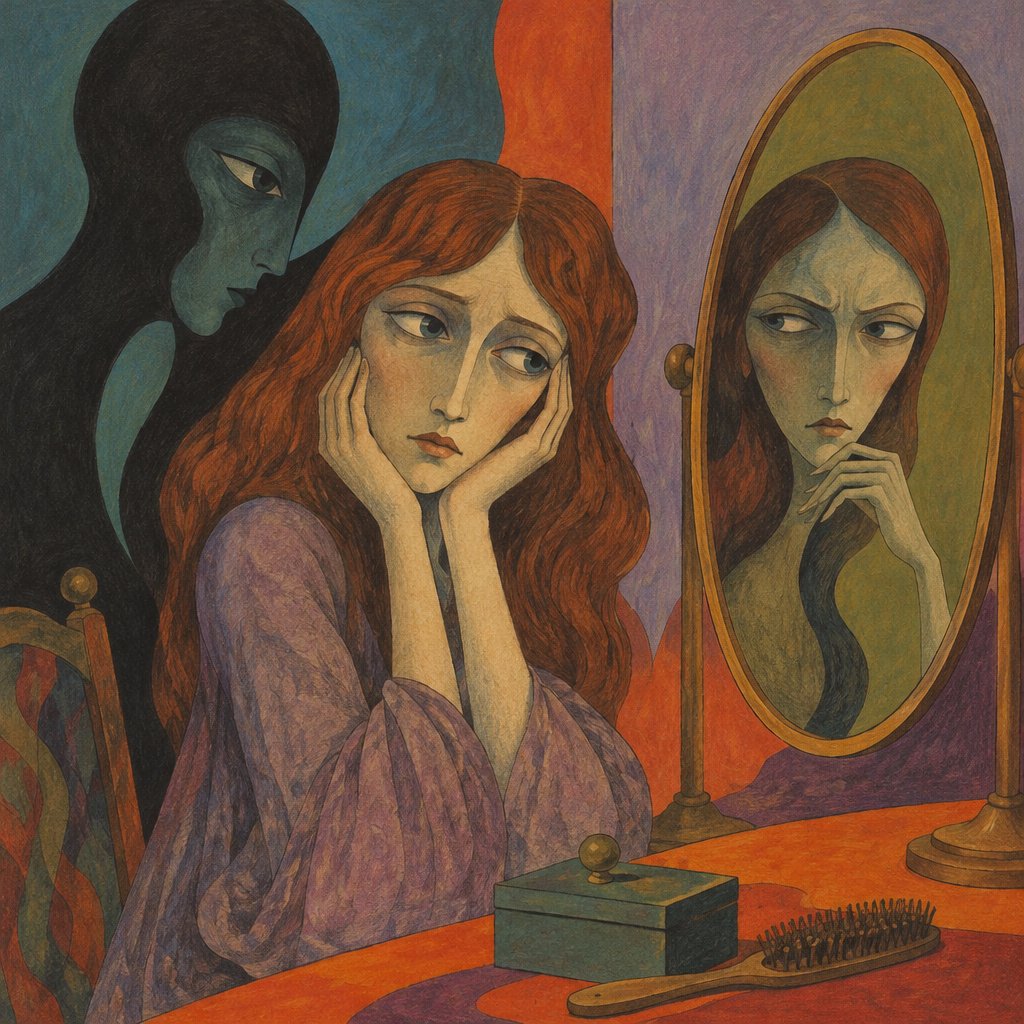
Here's where things get uncomfortable.
When we recognize a pattern in ourselves that we don't particularly like, our instinct is often to look away.
We put it in the rearview mirror. We pretend it isn't there. We promise ourselves we'll deal with it another day.
Because looking at our shortcomings honestly can feel frightening.
What if we don't like what we see?
But here's the problem.
You already don't like the pattern.
And avoiding it doesn't make it disappear. It simply allows it to continue operating in the background.
I believe that learning to trust yourself requires a willingness to look directly at the parts of yourself you'd rather avoid.
Not to shame them. Not to punish yourself for their existence.
But to understand them.
Because you cannot consciously change a pattern you refuse to acknowledge.
And acknowledging a pattern isn't the same as accepting it as your identity.
How to Build Self-Trust Through Small, Repeatable Actions
For the longest time, I didn't trust myself to wake up early.
I was convinced I was a night owl.
I'd set my alarm, turn it off, roll over, and sleep until ten. Rinse and repeat.
Eventually, I developed a belief about myself that I simply wasn't capable of being a morning person.
Then I found myself in a position where I needed to wake up at five in the morning.
And guess what?
I did.
Not once. Not twice. Repeatedly.
And over time, something interesting happened.
I began to enjoy my mornings.
They started to feel like mine.
What changed wasn't necessarily my personality. It was my pattern.
I started turning on the light, making myself a cup of tea, and moving into the living room to read.
Three simple, repeatable actions.
And those actions became signals that my day had begun.
You might recognize this as habit stacking, where one small action becomes the foundation for another.
It could be as simple as putting your socks on when you get out of bed.
That's it.
Socks on. Day started.
When you repeat a manageable action enough times, you begin collecting evidence that you can follow through.
And that evidence helps rebuild self-trust.
Of course, not every struggle with consistency is simply a habit problem. Exhaustion, burnout, mental health, and circumstances beyond our control can all affect our capacity to follow through.
But the principle remains: start with something manageable enough that you can meet yourself where you are.
Breaking Emotional Patterns and Learning to Trust Your Decisions
Now, let's explore something a little more nuanced.
Imagine you've decided to go no contact with someone.
Maybe it was a situationship. Maybe it was a relationship you knew wasn't good for you.
You've made the decision to move forward, but you don't entirely trust yourself to honour it.
You worry you'll look them up online, check their social media, or reach out when you're feeling lonely.
The thought crosses your mind.
I wonder what they're doing.
And suddenly, your hand is reaching for your phone.
Here's an opportunity to disrupt the pattern.
You cannot always control the thoughts that enter your mind. Memories, reminders, and unwanted thoughts are part of being human.
But you can practise choosing what happens next.
Instead of opening their profile, perhaps you put your phone down and make yourself tea.
Maybe you reach out to a friend, pick up a book, or remind yourself why you established that boundary in the first place.
You're not denying the thought.
You're choosing not to feed the behaviour that follows it.
And each time you make that choice, you're creating another opportunity to trust yourself.
Not because you'll never feel tempted again.
But because you're learning that temptation doesn't have to determine your actions.
What the Strength Tarot Card Teaches Us About Self-Trust

One of my favourite representations of self-trust in tarot is the Strength card.
I think people sometimes misunderstand Strength as a card about reining ourselves in, controlling our impulses, or overpowering the wild parts of our nature. And overcoming adversity
But that's not entirely how I see it..
Strength is about recognizing the inner animal within us.
The impulsive, fiery, curious, emotional, sometimes chaotic parts of our psyche.
And rather than trying to conquer those parts through force, Strength approaches them with patience, compassion, and understanding.
It's about taming the inner beast through love.
I know I'm an impulsive person. I'm fiery. I'm curious. I want to explore things, experience things, and sometimes follow an impulse simply because it has caught my attention.
Curiosity killed the cat, after all.
But learning to trust myself doesn't require me to deny those parts of my nature.
It requires me to understand them.
You can acknowledge an impulse without feeding it. You can love a part of yourself without allowing it to lead every decision.
Think about how we train animals through positive reinforcement.
We recognize a desirable behaviour, reward it, and encourage its repetition.
So why don't we approach ourselves with the same patience?
Why do we so often focus on punishing ourselves for the behaviours we dislike instead of reinforcing the ones that genuinely make us feel good?
The Strength card reminds me that self-mastery doesn't have to look like a battle.
Sometimes, it looks like learning how to be gentle with yourself while remaining accountable for your actions.
Learning to Trust Yourself When Life Is Outside Your Control
There's another side of self-trust that I think deserves more attention.
Sometimes, trusting yourself has absolutely nothing to do with controlling your habits, decisions, or impulses.
Sometimes, it's about trusting yourself to navigate the things you cannot control.
You cannot control other people.
You cannot guarantee that every decision you make will produce the outcome you want.
And you certainly cannot prevent life from throwing the occasional unexpected wave your way.
But you can begin developing trust in your ability to navigate those waves.
To adapt. To recover. To make another decision when the first one doesn't work out.
Self-trust isn't the belief that everything will go according to plan.
It's the belief that even when things don't go according to plan, you'll find a way to meet yourself where you are and move forward.
And that brings me to something I think is closely connected to self-sabotage.
A good reminder in times of uncertainty where a lot of aspects are outside of your control is the reminder of The Star,
The star card is a gentle reminder that if you follow your inner compass with a belief that everything will be okay, you will find peace and renewal in that.
Are You Afraid of Failure, or Are You Actually Afraid of Success?

We talk a lot about the fear of failure.
But I think there's another fear that often goes unrecognized.
The fear of success.
Which sounds counterintuitive, doesn't it?
Why would we be afraid of getting exactly what we've been working toward?
Because sometimes success comes with expectations.
When something finally starts working, it asks something of us.
Consistency. Responsibility. Commitment.
Suddenly, we have something worth maintaining.
Something worth fighting for.
Something we might lose.
And perhaps that's where the fear begins.
Maybe you're not afraid that your business will fail.
Maybe you're afraid it will succeed, and you'll be expected to keep showing up at a level you're not sure you can sustain.
Maybe you're not afraid of finding a healthy relationship.
Maybe you're afraid of becoming vulnerable enough to have something meaningful to lose.
Maybe you're not afraid of not reaching your goals.
Maybe you're afraid of what life will ask of you once you've reached them.
Sometimes what looks like self-sabotage is actually an attempt to protect ourselves from uncertainty, pressure, or the possibility of disappointment.
And sometimes it's a sign that the expectations we've attached to success need to change.
Because success doesn't have to mean endlessly demanding more of yourself.
It can also mean creating something sustainable. Something that supports the life you actually want to live.
How Do You Start Trusting Yourself Again?
You start small.
You begin by recognizing the ways you're already trustworthy.
You acknowledge the patterns that aren't serving you without turning them into permanent judgments about who you are.
You choose one manageable action that interrupts an old pattern and creates an opportunity for a new one.
And you repeat it.
Not perfectly. Not every single time.
But with enough patience and intention that you begin to recognize your own capacity for change.
There are still plenty of patterns in my own life that I'd like to disrupt.
And there are plenty of positive ones I'd like to strengthen.
I don't think self-trust is something we simply achieve one day and never have to think about again.
It's an ongoing relationship with ourselves.
One that requires honesty, accountability, compassion, and the willingness to begin again.
You don't have to become a completely different person to trust yourself. You just have to start giving yourself reasons to believe in the person you're becoming.
A Little Reflection Before You Go
Ask yourself:
Where in my life have I already proven myself trustworthy?
What pattern am I avoiding because I'm afraid of what acknowledging it might mean?
What's one small action I could repeat to begin changing that pattern?
Am I afraid of failing, or am I afraid of what success might ask of me?
Sometimes the answers aren't immediately obvious. And that's okay.
Tarot can be a beautiful tool for exploring the patterns, beliefs, and inner conflicts that influence our decisions.
If you're standing at a crossroads, struggling with self-trust, or trying to understand what's keeping you from moving forward, I'd love to explore those questions with you.
And if you enjoy reflections on tarot, personal growth, life's transitions, and the beautifully complicated experience of being human, consider joining my mailing list for more guided messages and support.
With love,
Chloe Lloyd 🔮
